Thursday, November 1, 2018

Open Invitation to Photograph Australia

As a keen photographer I enjoy following the art of many photographers around the globe through the various internet groups,blogs, youtube etc.

I love looking at places I have never been to and not likely to do so.

While I love the pics and work of many I can't help but think that I live in the best country in the world to do photography.

These are some reasons:

1. We have the most amazing light that is never clouded by smog.
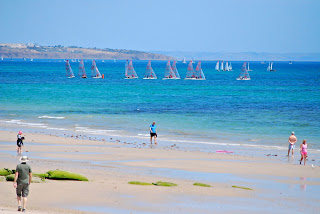


2. Our colours of the natural landscape are amazing. Particular the rich reds and blues of outback Australia.


3. Australia is a relatively safe place to visit. We do have crime but not on the scale of other countries.

4. Accomodation is not expensive and there is a great variety of options.If you are coming from America the American dollar is worth more than the Australian so your money goes further.

5. Our flora and fauna is unique as part of the "separate creation" that Charles Darwin thought in terms of.


6. There are unique highways and byways to explore. Long road journeys that are a photographer's delight.

7. Amazing beaches and National Parks.


8. Picturesque and vibrant cities.


9. A place where the arts flourish.


10. Australian's unique humour and outlook on life. "She'll be right mate!"

11. Great local produce that blends in with the fare of many introduced nationalities and their culture.

Oz Asia Festival in Adelaide

12. A great sporting nation with many high achievers on the international stage.

13. Our landscape is diverse. Tropical, Rainforests,Alpine areas, Outback deserts, amazing Island destinations, long inland rivers, the home of many varieties of Eucalyptus trees.

14. Yes we do have some dangerous animals but you would be a lot safer here than Africa.

So if it's on your bucket list why don't you come.

I will point you in the right direction.


Thursday, August 23, 2018

What makes you a real Photographer?


You need to use a tripod to be a real photographer!

Based on my definition there are not a lot of "real" photographers these days.

In the early days of photography it was a must.

Do I use one all the time?

Very rarely.

One of my favourite photography authors is Bryan Peterson.

In his book "Understanding Exposure" he emphasised time and time again "first place your camera firmly on the tripod."

Even in this day and age of image stabilised lenses and cameras he still probably uses that as a mantra.

I tend to shoot hand hold most of the time and there are times when I wish I hadn't.

Back in the day when I was doing weddings I always used to take my tripod with me.

1. To get steady sharp photos.
2. In case I struck low light.
3.To maintain eye contact with people, mainly in group photos, while I pressed the shutter.

4. This next one is a great use of the tripod when you might not even put the camera on the tripod.

If you are wanting to do family and bridal party group photos and you are at a location and it is just after the ceremony and you are about to get started.
If you are at a location where the wedding has been outdoors and people may be mingling and talking and having a bit of a cocktail party.
They are scattered all over the place.
Then is when I would pick the spot where I wanted to do my group photos and then set up the tripod
where I would be shooting from.
I would then announce to all the key people " hi folks, the bride and groom are now ready for family photos can you all gather where the tripod is thank you."

Now people associate the tripod with real photographers.

Professionals!

You will find this works a treat .
 They might not know who you are but they know what a tripod is.

Try it at your next wedding.

"Real Photographers" use tripods.


A typical group shot. How did you get them there?


Room set up for one of my training classes. Note the tripod on the table.
Please note I am available for group training in photography or for individual tuition.


Wednesday, August 9, 2017

Using Old Flash on Digital SLR

I have been experimenting with trying old electronic flashes on my Digital SLRs.

I have read there are some very cheap new speedlights on the market that while not TTL, still have full bounce ,tilt and swivel and can be used on a hotshoe mount.

These are probably a good buy for someone starting out but if you are an old school film shooter like me it is interesting what you might have lying around or can pick up at garage sales or flea markets.

Back some years ago, probably the 1980's ,I bought an achiever 632 LCD Thyristor flash to us with my Pentax Super A(Super Program).

Well this flash does not give me TTL flash(it did originally on my Pentax) but it has enough adjustments on it for me decide how much flash I want whether on manual settings or "P".

Here are some samples I got in my "studio" using the Camera mounted on the hotshoe of a Canon 600d.

I have found that most of these older flashes I have tried so far will work on different camera makes as long as they can be mounted on a hot shoe.

Bounce flash, Achiever 632 LCD on Canon 600D

Bounce flash, Achiever 632 LCD on Canon 600D(vertical tilt)

Bounce flash, Achiever 632 LCD on Canon 600D

Flash mounted on Canon 600d

Flash mounted on Canon 600d


Friday, May 19, 2017

Working as an Assistant in Wedding Photography


Photo by Nat Rogers as an assistant. Nat is now a fulltime professional photographer.Only an assistant can get shots like this. Pure Gold!


By far,in my opinion, the best way to get into Wedding Photography is by assisting a seasoned Wedding Photographer on at least one shoot or several.

To a certain extent you can have this experience by watching you tube videos but it is not the same as being there.

There is a benefit to the Assistant and the main shooter.

For the main shooter, the Assistant can do all this.

 1. Help to navigate and sometimes drive your car.
2. Make sure you don't leave gear behind and carry some of your gear for you.
3. Remind you during the day of shots you may have missed earlier. Sometimes you run out of time in the pre-wedding shoot but important shots that you missed can be caught up with later.
4. Hand you different cameras,lenses and assist with lighting and reflectors etc.
5. Get great shots that you will not see if you are the principle photographer.
6. Pick up on relationship issues in families during the shoot.
7. Make creative suggestions.
8. Ask questions that make you think about what you are doing.
9. Help sometimes with people who don't know how to buttonhole a flower and similar. 

Benefits for the Assistant.

1. Invaluable hands on experience of the dynamics of a wedding shoot including time constraints.
2. Learn about thinking on your feet.
3. Learn about relating to customers. What to say,not what to say.
4. Learning and fine tuning and practising your camera skills.
5. Learning the art of seeing.
6. With permission from the main shooter showing your potential customers some real work.
7. Usually you should be getting some payment for your services.
8. helping you decide whether you want to do weddings or not.
9. Experience in editing if allowed or even engaged to do so.

If you want to do this simply approach someone you know or contact listed photographers who may be very glad of some help. Not all will want you but just approach the next one.

You might like also to have a look at my video on the Profile of a wedding photographer.

https://www.youtube.com/watch?v=ATgCH2ByWdE&t=257s


Sunday, April 2, 2017

Come and Try Photography

I have just this last Friday(31/3/17) completed 12 hours of photography training for 2 hours once a week through the community outreach programmes organised by the Burnside Council in Adelaide.
 My general feeling and feedback from participants is that this was a worthwhile exercise.

We had much discussion and viewing of samples of photography.

I worked my way through a keynote(powerpoint) programme I have developed on the fundamentals of photography although time running out cut us a little bit short on that.

A highlight was a field trip to a local park where we practised different techniques.

On the last day we discussed a quiz I  had handed out on the first day and generally speaking most were able to get the majority of questions right.

I have offered to all the participants a couple of hours extra time to help them fine tune their cameras as it is difficult to do that in a group setting.

With their permission and the permission of the Burnside council I have posted some of the pics recorded during the course by the participants.

During the course one of the participants,Wendy, brought in some old negatives her Nanna had taken years ago on a box brownie camera.

I scanned them for her and there were some iconic Australian picnic scenes amongst them.

On our field trip I had the idea we would re create some picnic scenes with a blend of old and new technology.

That was fun with "Mr. Tripod" and his "self timer" friend getting some good shots.

I apologise for being the subject material in some of these shots as I did not have any paid or volunteer models to help out and I did not want to embarrass participants into the role.

Many thanks to the staff at Burnside for co-ordinating and setting up.
Matthew, Shandre and Ros.


from Wendy's box camera negs

from Wendy's box camera negs

from Wendy's box camera negs


Wendy using Box Camera as in days of old.


Tripod "selfie"


Shooting into the light.


Capturing the peak of action

Capturing the peak of action


Tuesday, August 9, 2016

Helping Not for Profit Support Groups with Photography


Yesterday I once again had the privilege of meeting with the Parkinsons  SA Photography interest group.

I always enjoy this and share my experiences as a photographer and discuss techniques,cameras and where to find help on the net.

If there are similar support groups operating in South Australia I am happy to come along and do something similar if my schedule permits.

I am a firm believer in photography being great therapy.

I am also open to doing some photographic work for not for profits.

Please feel free to contact me on 0417867476 or email at geoff.g.thompson@gmail.com

http://geoffthompsonsblog.blogspot.com.au/2015/04/photography-for-sufferers-of-parkinsons.html

Saturday, April 23, 2016

What Pics do you release for your Wedding Photography Clients?

When you photograph a wedding do you only give your clients your best shots?

Most Professional Photographers will say yes to that but I have always had a slightly different approach.

I have a view that any picture taken is better than one that is not taken.

Mostly that is.

Sometimes I believe we should not pull the trigger.

Seem my link to a previous post on this.

 http://geoffthompsonsblog.blogspot.com.au/2011/10/when-not-to-take-photograph.html

There are however pictures that mean a lot to people even though the shot may have virtually no artistic or photographic merit.

I always had the view that there may be a pic that had some emotional significance.

In that thought I always showed my customers the rejects in case there was something important.

My grandmother was virtually staying alive to come to our wedding.

She died a few months later.

A couple of snaps taken by others that show she was there were very important to me.

I have known people to lose a parent even before they came back from their honeymoon,

Some guests at a wedding we were videoing lost their little baby who was at the wedding a few days after the wedding.

Sometimes just the expressions on the faces or the significance of what was happening in the moment are priceless regardless of the merits of the pic as a wedding image.

Of course so many people are taking images as guests these days that some of the special moments  are likely to be captured.

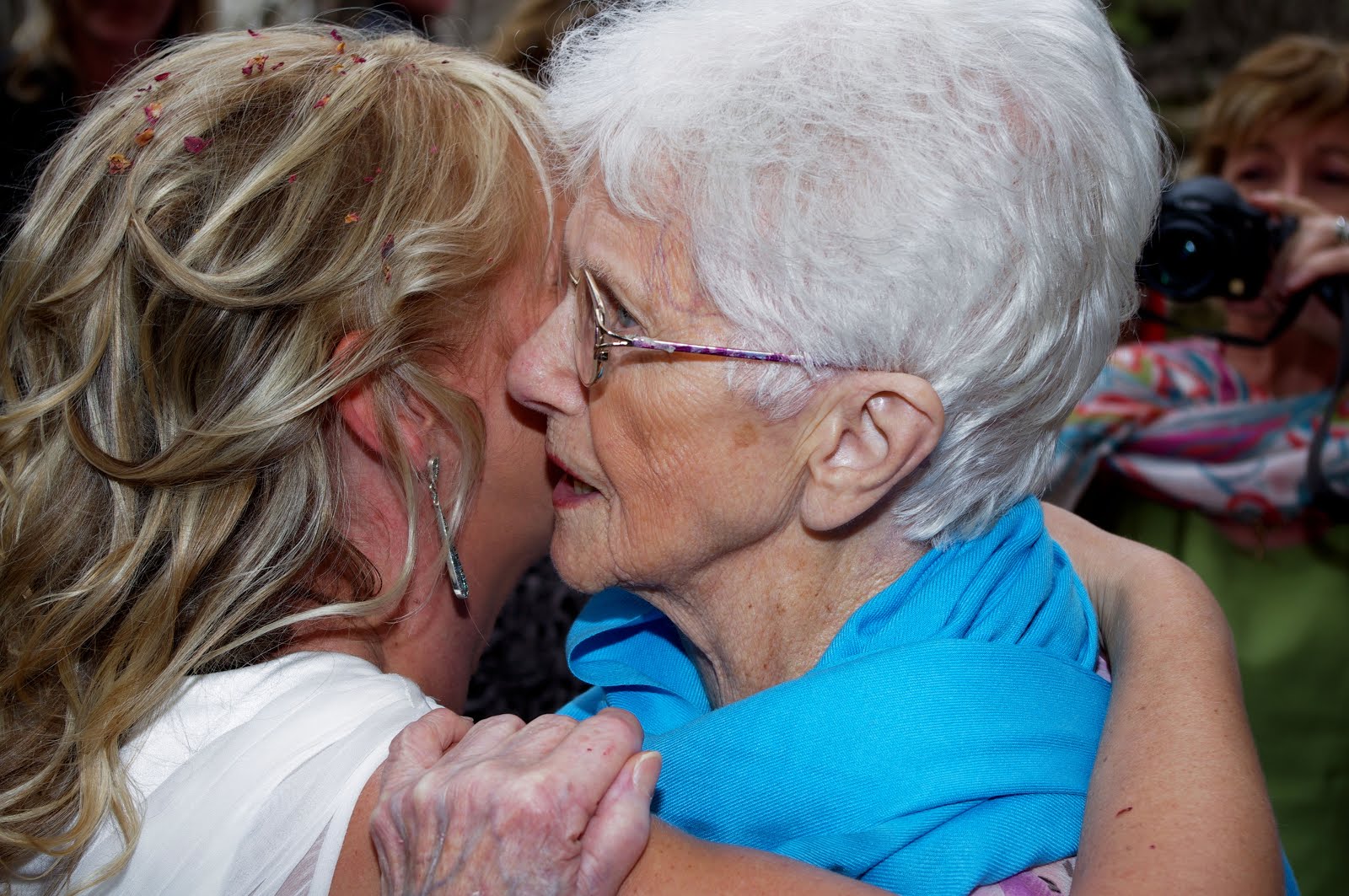
This Granny  had just had a pacemaker fitted for her heart condition. She died a few short weeks after this wedding of her eldest grandaughter.
These pics show how much she enjoyed being there and are priceless.